
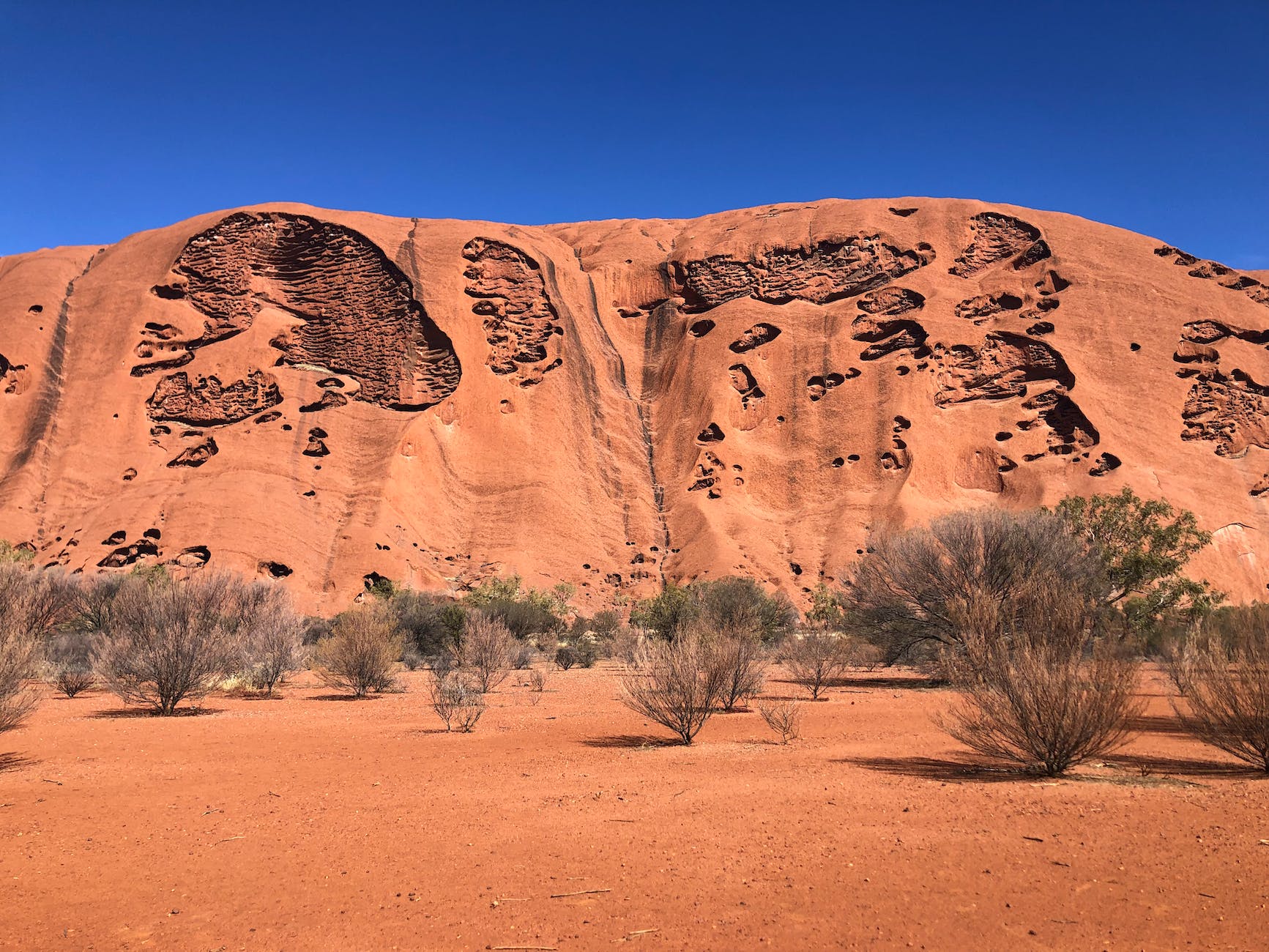


The Australian outback is renowned for its expansive and remote landscapes, spanning the majority of the country’s interior. Characterized by its iconic red earth, vast arid regions, and distinctive wildlife, the outback holds a significant place in the Australian identity. This rugged terrain is marked by its extreme climate, with scorching temperatures during the day and chilly nights. The rich cultural history of the outback, particularly its significance to Indigenous Australians, adds another layer of depth to its allure. Whether it’s the impressive rock formations such as Uluru, the captivating starry skies, or the resilience of its flora and fauna, the Australian outback continues to fascinate people around the world.
Embarking on this outback road trip from Cairns to Uluru was an adventure like no other. The journey took me through some of the most breathtaking and remote landscapes Australia has to offer. Starting in Cairns, the gateway to the Great Barrier Reef, I soon found myself immersed in the rugged beauty of the Australian iconic outback landscapes. Each stop along the way revealed unique aspects of this vast and diverse country, deepening my appreciation for its wonders. From the majestic Uluru to the captivating sights of the Red Centre, every milestone of the journey left an indelible mark on my heart.
🚗Day 1: Cairns to Charters Towers
The journey began in the lush tropics of Cairns, where the green rainforest quickly gave way to open plains and wide horizons. The road stretched endlessly, and with each passing kilometre, the Outback started to reveal itself. By the time I reached Charters Towers, the air was drier and the town’s old gold-rush heritage shone through its historic buildings. Spending the first night here felt like stepping into Australia’s past – quiet streets, country hospitality, and that unmistakable Outback sky filled with stars.


🚗Day 2: Charters Towers to Mt Isa
The second day meant another long stretch of road. The scenery grew more rugged, the colours deeper, and the silence of the Outback more profound. Driving into Mt Isa, I felt the energy of a working mining town set against a backdrop of red earth and dusty ranges. It was a place full of character – hardworking, resilient, and unmistakably remote. I settled in for the night, knowing the real desert experience was only just beginning.

With 8 hours and 15 minutes of driving, on the open road along Flinders Highway to Mt Isa was an experience in itself. Along the way, I passed through outback towns of Torrens Creek, Prairie, Hughenden, Richmond, and Julia Creek, where I stopped for rest and recreation. Shortly thereafter, I resumed my road trip through a long stretch of dry and arid lands to Mt Isa, passing through the remote town of Cloncurry. Without pausing for sightseeing, except for amusing ourselves with my own voice for entertainment on board. Looking out the window, it seemed like the road just went on and on endlessly. However, I found something remarkably soothing about traveling by road through the Outback. It’s simply the opportunity to gaze out the window at the surroundings without unwavering concentration on the road ahead. The remote and arid landscapes themselves are staggering to behold, evoking a sense of freedom. A journey like this allowed me the freedom to be lost in my own profound thoughts one moment and then completely engaged the next.

🚗Day 3: Mt Isa to Tennant Creek
The third leg of the journey was perhaps the loneliest yet the most meditative. The road felt endless, broken only by the occasional roadhouse, wandering cattle, or wedge-tailed eagle perched on a fence post. Tennant Creek came as a welcome stop after hours of nothing but horizon. That night, the desert air was cool, and the stars seemed to hang so close that I could almost touch them.
I departed from Mt Isa early and embarked on a leisurely journey towards the Queensland and Northern Territory border. The drive from Mt Isa to Tennant Creek took me less than 7 hours and was notably less strenuous compared to the previous day. The presence of bitumen on most of the outback roads facilitated a smooth and comfortable trip, with fellow travelers along the way experiencing similar ease. As is characteristic of many outback regions in Australia, the landscape was predominantly dry and desert-like, with minimal vegetation and sparse tree cover. While at times the scenery may appear stark, it is also intriguing to contemplate the vast and diverse terrains that exist within our land, each with its own set of extreme conditions.
Just within 2 hours of driving from Mt Isa across the deserted lands of western Queensland, I reached the small country town of Camooweal. Known as the gateway to the “Northern Territory” and “Queensland”, it served as our transition point as I crossed the border into the Northern Territory, leaving Queensland behind, before reaching my final destination – Tennant Creek.

🚗Day 4: Tennant Creek to Uluru
This was the day I had been waiting for. The drive took me deeper into the heart of the Northern Territory. Flat desert plains rolled by until, suddenly, in the distance, I saw it – a giant red monolith rising from the earth as though placed by another world. Uluru. My heart raced as I drew nearer; no photo or story could ever prepare me for that first sight. I arrived by late afternoon and watched the rock glow with fiery colours as the sun dipped behind the horizon. It was magic.
🚗Day 5: Exploring Uluru and Kata Tjuta
Standing at the base of Uluru the next morning, I was overwhelmed by its sheer scale – 348 metres high, stretching almost 10 kilometres around. The colours shifted constantly, and up close, I noticed caves, ancient rock art, and weathered surfaces that told stories thousands of years old.
I made the climb to the top of Uluru, an experience that left me breathless in every sense. The ascent was tough, but once at the summit, the view was surreal – an endless sea of desert stretching to the horizon, broken only by distant ranges. It felt like standing on the roof of Australia, the silence broken only by the whisper of wind.
Later, I journeyed to Kata Tjuta, the Olgas, just a short drive away. In contrast to Uluru’s single commanding form, Kata Tjuta is a collection of 36 domes – rugged, ancient, and mysterious. Walking through the Valley of the Winds, I felt dwarfed by the towering red walls. Where Uluru is bold and singular, Kata Tjuta feels like a gathering of ancient guardians, each with its own presence.
🌄 Why Uluru (Ayers Rock) Captivates
Standing in front of Uluru, also known as Ayers Rock, is an indescribable moment. Rising 348 metres high and stretching almost 10 kilometres around its base, this colossal sandstone monolith seems to change colour with every passing hour – glowing red at sunrise, a deep rust during the day, and fiery orange at sunset.
What makes Uluru truly unique is not just its size but its cultural and spiritual significance. To the Anangu people, it is a sacred site, woven deeply into their Dreamtime stories. Walking close, you notice caves, ancient rock art, and weathered textures that tell stories far older than memory.
I had the rare chance to climb to the top of Ayers Rock. From the summit, the view was surreal – the vast Outback stretched endlessly in every direction, a sea of desert, spinifex, and distant ranges. Standing there felt like being on the roof of Australia, with the silence broken only by the whisper of the wind.


🛏️ Where to Stay
The Ayers Rock Resort offers a range of accommodations—from luxury stays at Sails in the Desert to budget-friendly options like the Outback Lodge and Campground. Guests can immerse themselves in Indigenous culture through guided walks, art experiences, and storytelling events. I opted for the comfort and private accommodation to really experience the outback.

✨ Must-Do Experiences
- Base Walk: Circumnavigate the rock to discover waterholes, rock art, and sacred sites.
- Field of Light: A breathtaking solar-powered art installation by Bruce Munro that illuminates the desert at night.
- Tali Wiru: Fine dining under the stars with views of Uluru and the sounds of the desert.
🏜️ What Are the Kata Tjuta (Olgas)
Not far from Uluru lies another wonder – the Olgas, or Kata Tjuta, meaning “many heads.” Unlike the single massive form of Uluru, Kata Tjuta is a collection of 36 giant domed rock formations rising out of the desert floor. They are more rugged, mysterious, and spread out across a wide area.
Walking through the Valley of the Winds trail between the domes was a completely different experience to Uluru. Here, the rocks tower like sentinels, casting cool shadows, and the wind whistles through the narrow passages. Where Uluru feels like a solitary giant, Kata Tjuta feels like a gathering of elders, each dome with its own character.


🚶♀️ Must-Do Walks
- Valley of the Winds Walk: A 7.4 km loop that takes you deep into the domes, offering panoramic views and a sense of immersion in the landscape’s grandeur.
- Walpa Gorge Walk: A shorter, easier trail (2.6 km return) through a narrow gorge with towering walls and desert flora.
Unique Yet Connected
What struck me most was how Uluru and Kata Tjuta are so different yet deeply connected. Uluru is singular, bold, and commanding – one immense presence dominating the desert. Kata Tjuta, on the other hand, is scattered, diverse, and more secretive in its beauty. Together, they form the beating heart of the Red Centre, offering two very different but equally unforgettable experiences.
✨ This Outback journey, from tropical Cairns through rugged mining towns to the spiritual heart of Australia, was the adventure of a lifetime. But nothing compared to the moment I stood on top of Uluru and gazed out over the endless desert – a memory etched forever.