akamau~HappyWanderer

Let travel surprise you!


Papua New Guinea Independence: A Journey of Challenges and Progress

akamau: HappyWanderer Avatar
3

As someone who lived through Papua New Guinea’s early years of independence, I’ve seen the nation grow from humble beginnings into a vibrant land full of culture, resilience, and pride. From the challenges of nation-building to the widening gap between the rich and poor, this is my reflection on how far we’ve come — and…


When Papua New Guinea (PNG) gained its independence on September 16, 1975, My parents were there to witness the dawn of a new era — a time filled with excitement, pride, and hope that swept across the nation. As someone who lived through its early years, they have seen the country evolve from humble beginnings into a proud and resilient nation, still finding its way but never losing its identity.


The Past: The Birth of a Nation

The years following independence were a period of great transition. We were a young nation with a rich cultural tapestry — over 800 languages, hundreds of tribes, and traditions as old as time itself. Our leaders, led by the late Grand Chief Sir Michael Somare, believed deeply in the promise of unity, peace, and progress.

Back then, development was slow, and much of the country was still rural and isolated. Roads were rough, communication was limited, and modern infrastructure was scarce. But what we lacked in resources, we made up for with determination. There was a shared belief that our future rested in education, hard work, and faith in each other.

Even through moments of political instability and social challenges, Papua New Guinea held strong. My parents still remember the sense of pride people carried — people might not have had much, but they had independence, and that meant everything.

The Present: A Nation Growing Through Challenges

Fast-forward to today, and Papua New Guinea has come a long way. The cities have grown, the economy has expanded through mining, agriculture, and energy, and our people are more connected to the world than ever before. There is innovation, ambition, and a growing sense of what we can achieve as a nation.

Presently, Papua New Guinea faces a range of challenges including inadequate healthcare and education infrastructure, high unemployment rates, and environmental concerns. The country is also working to tackle issues related to gender inequality and political corruption. Nonetheless, efforts are being made to leverage the country’s rich natural resources to drive economic growth and development.

Yet, beneath this progress lies a difficult truth — many ordinary Papua New Guineans continue to suffer. The cost of living has risen sharply, while wages have remained low. In rural communities, basic services such as clean water, electricity, and proper healthcare are still out of reach. Schools lack resources, hospitals are underfunded, and job opportunities are scarce, forcing many to survive through informal work or subsistence farming.

The gap between the rich and the poor is widening, and it’s becoming increasingly visible. In urban areas, a small elite enjoy modern comforts and opportunities, while countless others struggle daily to meet their basic needs. Corruption and mismanagement have worsened the situation, as funds intended for development often fail to reach the people who need them most.

What’s most disheartening is that little seems to be done about it. Promises of reform and better governance are often made but rarely fulfilled. Many people have lost faith in the system, feeling unheard and left behind by those in power. Still, despite these hardships, the resilience of the people remains strong. Papua New Guineans continue to hope, to adapt, and to find ways to survive — proof of the unbreakable spirit that has carried the nation through every challenge since independence.

The Pride of the People

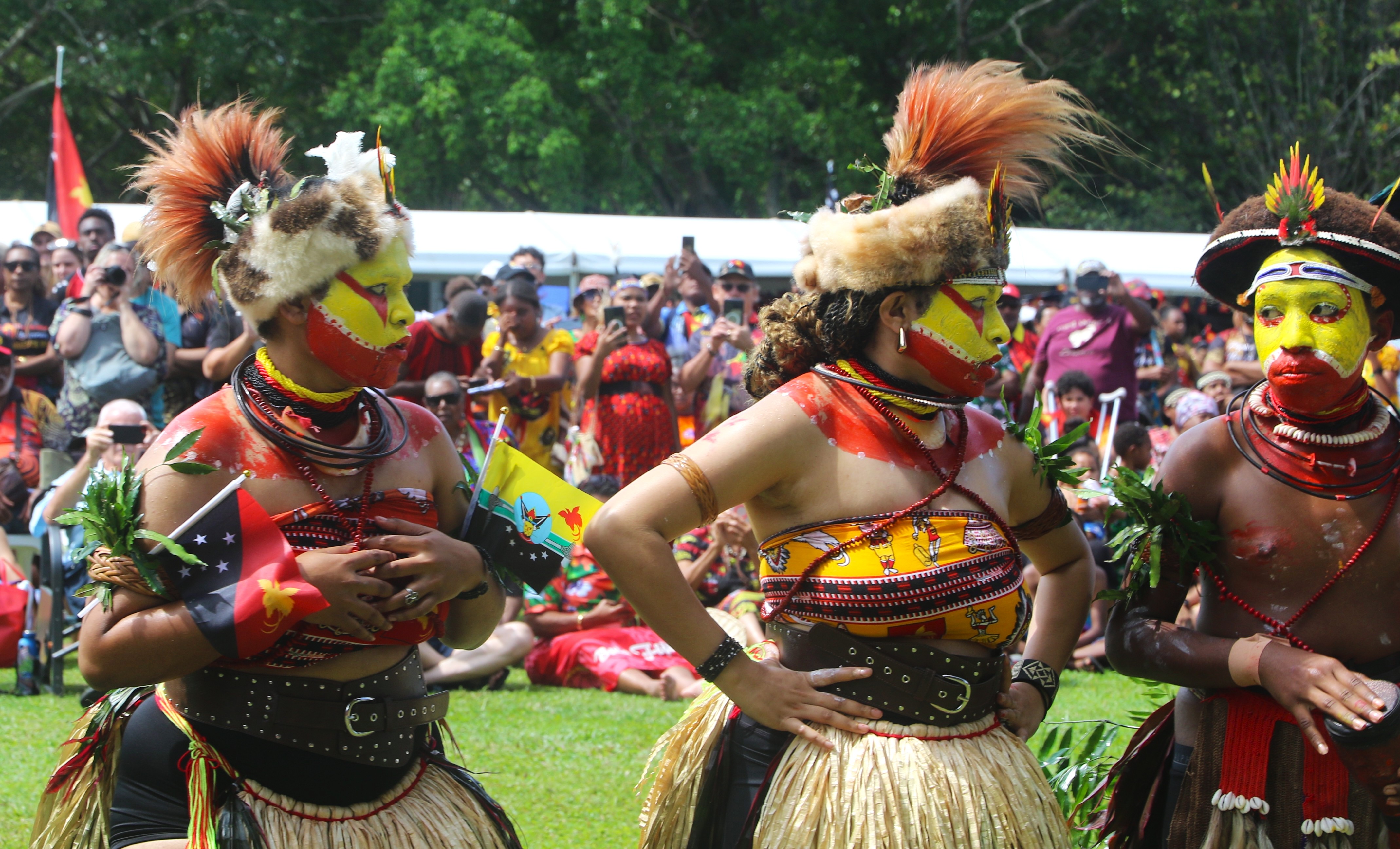
What truly defines Papua New Guinea is not its wealth or politics — it’s the people. From the highlands to the islands, our cultures are vibrant, our traditions alive, and our pride unshaken. The bilas (traditional attire), the sing-sings, and our deep respect for custom and land remain at the core of who we are.

I’ve always believed that our greatest strength lies in our diversity. We may come from different tribes and speak different tongues, but when we celebrate our independence, we stand together as one people — proud, free, and united by our shared history.

Over the years, I’ve seen young Papua New Guineans rise — in sports, arts, education, and business — proving that our nation’s potential knows no limits. Their success stories remind me that independence wasn’t just a political moment; it was a gift of opportunity for every generation that followed.

Where to Now: Building the Future

As I reflect on how far we’ve come, I also think about where we’re heading. The future of Papua New Guinea depends on our ability to lead with vision and integrity. We must invest in education, women’s empowerment, sustainable development, and strong leadership.

More importantly, we need to keep the spirit of unity alive — to see ourselves not just as individuals from different provinces, but as one nation working toward a shared future. The challenges are real, but so is our potential.

I often remind myself that independence was not the end of a journey — it was only the beginning. Papua New Guinea continues to grow, learn, and find its place in the world. Through every challenge and triumph, one thing remains constant — the pride of the people and the unbreakable spirit of this land I proudly call home.

Papua New Guinea’s story is one of resilience, hope, and faith — a living testament to the strength of its people and the dreams that began in 1975.


3 responses to “Papua New Guinea Independence: A Journey of Challenges and Progress”
  1. Paul Avatar

    Years ago, in the 1980s I lived in PNG as a Volunteer. PNG was just 10 years Independent from Australia and I believe was – at that time – still in need of financial and in-kind assistance. I visited the mine site at Panguna and spoke with locals at the food store at the local workers’ quarters. I spent Christmas 1988 at Tantareki village where the people had a modest cocoa industry. Mi save gut liklik lo sampla samtin blo PNG, nating? Olsem tasol, now I say that PNG should have banks overflowing with Kina from mining and oil royalties. I ask – what has happened over the decades? Where has all the money from Oil and Mining gone? I’d say wasted on those in power. Where are the hospitals, sealed roads, clean water to every village and reliable Internet to major centres? Sure, PNG and neighbours rely on Australia and NZ for international defence and protection and at times Federal Police to support local police in times of strife. Celebrate Independence from Australian Government. 100%. However can PNG honestly say they are independent from International Aid? Is PNG independent and free from the rot of political corruption? I await an honest and frank reply. Paul. meanwhile – stap isi na no hambug tumas!

    1. akamau: HappyWanderer Avatar

      Thank you for your comment. Your views are 100% correct.

    2. akamau: HappyWanderer Avatar

      Hi Paul: This is recent article I wrote and posted on FB, just before the 50th PNG Independence Celebration.
      Papua New Guinea at 50: My Reflections on the Past and Present
      This year, Papua New Guinea celebrates its 50th Independence Anniversary — a milestone that should make us all proud as Papua New Guineans. For me, it’s a moment of both celebration and reflection. While we have come a long way since 1975, I can’t help but feel that so much of the promise of independence still remains unfulfilled.
      Looking Back with Pride
      When PNG gained independence, the air was filled with hope and expectation. We were given the opportunity to chart our own course, to build a nation that reflected the richness of our culture and the strength of our people. With vast natural resources and one of the most culturally diverse populations in the world, the potential for success was always there.
      I grew up with that same sense of pride — knowing that our people are resilient, resourceful, and blessed with a land that has so much to offer. But as the years have gone by, I’ve also seen the struggles that continue to weigh heavily on our nation.
      The Harsh Realities Today
      Fifty years on, I find it hard to ignore the challenges PNG still faces. We remain a country where basic services and infrastructure are lacking. Many rural communities, where most of our people live, are still isolated, cut off from proper health care, schools, and roads.
      Our institutions, though established with good intentions, often feel weak and ineffective. Corruption has eaten away at trust and resources, and that hurts ordinary citizens the most. The political system is another concern — it’s been unstable for decades, with governments changing hands far too often. That instability has cost us the consistent, long-term planning we desperately need.
      On the streets, crime and lawlessness remain high. Too many of our young people are unemployed, and with limited opportunities, they are left frustrated and vulnerable. I’ve seen how this not only affects individuals, but entire families and communities.
      My Hopes for the Future
      Even with these struggles, I haven’t lost hope. If anything, I see the resilience of Papua New Guineans every single day. Our people still find ways to survive, to build, to celebrate life, and to carry on. Churches, community groups, and ordinary citizens are often the backbone of this country when government systems fall short.
      As we celebrate our 50th Independence Anniversary, my hope is that we use this milestone as a turning point. For the next 50 years, we must do better. We need to build infrastructure that connects people, strengthen institutions that serve fairly, and truly fight corruption with political will. We need to create opportunities for our young people so they have a reason to hope and a chance to contribute to their country’s growth.
      A Call to Reflection
      For me, this anniversary is not just about looking back proudly, but also about looking forward honestly. PNG is a nation of great beauty, great culture, and great potential — but we must face our problems if we are to build the future our people deserve.
      At 50 years of independence, I believe it’s time to reflect, to regroup, and to recommit ourselves to building a stronger and more stable Papua New Guinea. The journey ahead won’t be easy, but with the same resilience and strength that has carried us this far, I believe we can do it.

Leave a Reply to akamau: HappyWandererCancel reply

Discover more from akamau~ HappyWanderer

Subscribe now to keep reading and get access to the full archive.

Continue reading

Discover more from akamau~ HappyWanderer

Subscribe now to keep reading and get access to the full archive.

Continue reading