
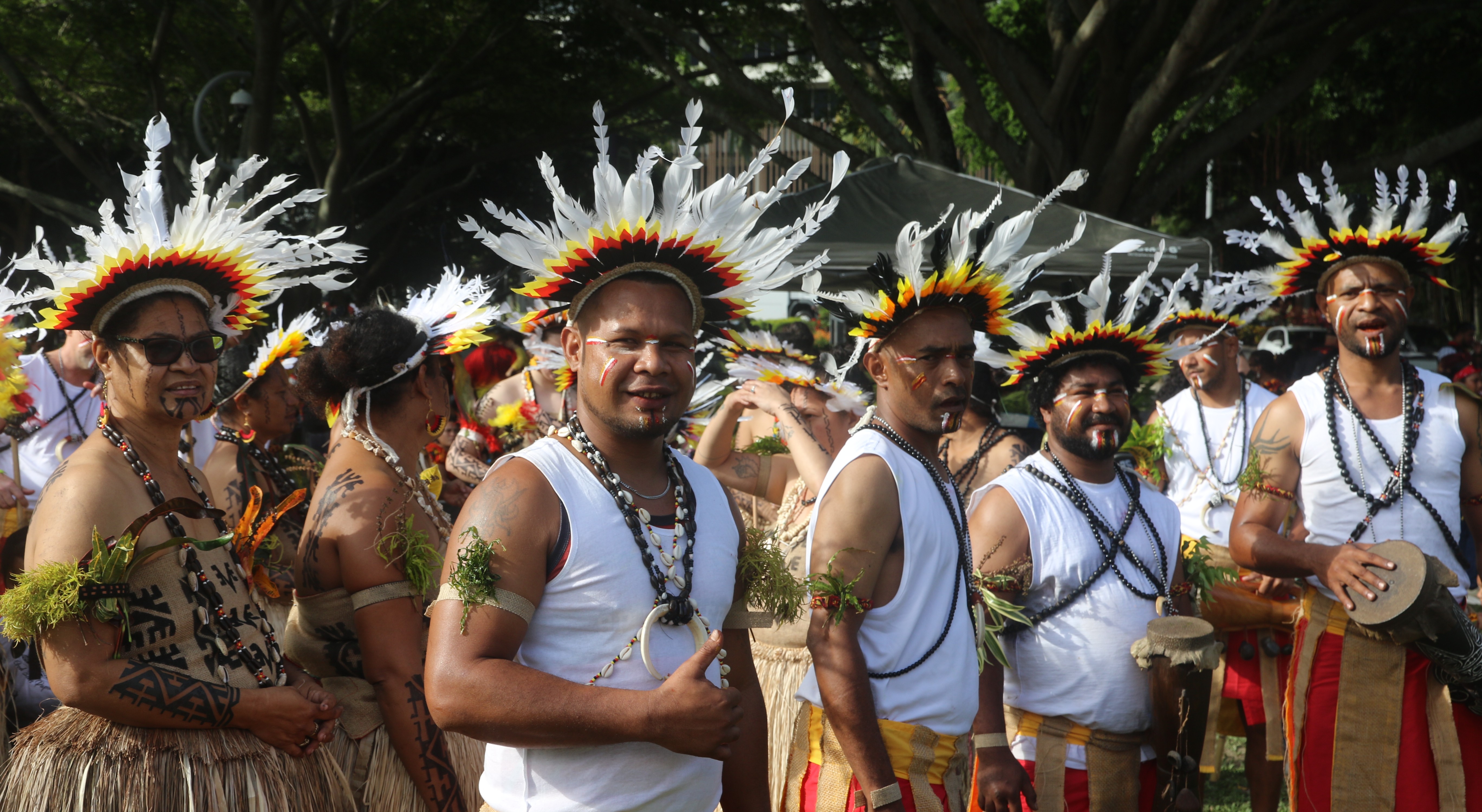


Known as one of the most dangerous cities in the world but I have returned home to visit families and friends both in the village and Port Moresby city. When people hear about Port Moresby, one of the first things that often comes up is its reputation as one of the most dangerous and unsafe cities in the world. Crime rates, social unrest, and the challenges of urban life have painted a picture that keeps many travelers away. The city’s reputation for being unsafe is no secret. After all, Port Moresby is often listed among the top 10 most dangerous cities in the world. Yet, behind those headlines, there’s another side of Port Moresby — one that I was able to glimpse during my recent 5-day stay.
Day 1: Back in the City & Morning Walk to Local Market
After days in the village, I returned to Port Moresby on a Public Motor Vehicle (PMV) in the early hours of the morning. The ride back into the city was a reminder of contrasts: the freedom of the open road fading into the tension of Port Moresby’s guarded streets. By the time we arrived, the city was waking up — traffic beginning to crawl, voices shouting from roadside stalls, and the smell of dust and smoke hanging in the air. By 9am, I felt restless enough to venture outside with my nephew. We went on a short walk to the local market, but I was told to leave valuables behind and only bring what I was prepared to lose. Still, I slipped a little cash in my pocket, thinking I might buy something.
The moment I stepped outside the unit, reality struck. Armed security guards stood at the gate with rifles resting in their arms, scanning the street like sentinels. High fences crowned with barbed wire, and watchful eyes on every corner reminded me exactly where I was. It was a constant reminder that safety was fragile here. My nephew stayed close as we entered the market.
The market itself was vibrant and full of life — stalls of kaukau, bananas, taro, pineapples, and bundles of betel nut. Women sat cross-legged behind their stalls or on the ground, calling out prices in Tok Pisin. But beneath the colour and noise was an edge. When I instinctively pulled money from my pocket, my nephew quickly shut me down. “Don’t show it — too many people are watching.” He whispered that groups work together, signalling one another, and we could easily be followed out. My stomach tightened. Suddenly, every glance felt sharper, every step heavier.
By the time I made my way back to the unit, I felt both exhilarated and uneasy. Exhilarated because I had stepped outside the safety net, tasted a slice of real city life, and seen the resilience of people going about their day despite the challenges. Uneasy because I knew how quickly things could change here.
Boroko Market


Day 2: Hotel Walls
By midday, my nephew flagged down a local taxi, and we drove back to the hotel where I would be staying for the rest of my five days in Port Moresby. The ride gave me time to breathe, but my mind kept replaying the scene at the market — how close I had been to making a simple mistake, and how, in Port Moresby, even something as ordinary as buying fruit could turn risky.
I spent the second day mostly inside the hotel, which felt like a safe bubble in a city that can be unpredictable. The hotel became my sanctuary, a place where I could relax, observe, and prepare for the times I did venture out. The building felt like a fortress — tall walls, guards at the gates, guests moving with a mix of leisure and caution. From my window, I could see the bustle of the city below: traffic jams, PMVs honking, and people walking purposefully through the heat.
Inside, life felt strangely detached. The pool sparkled blue, the restaurant hummed with quiet conversation, and I sipped coffee while wondering how life outside could be so different from the calm within. Port Moresby, I realised, is a city of two worlds: one behind gates, and one beyond them.
But staying locked inside was never going to be the whole story. Luckily, I wasn’t alone. I have families who live in Port Moresby that made all the difference. Having them by my side, I felt brave enough to step beyond the hotel gates. They became my guides, navigators, and protectors — helping me experience the city safely and meaningfully.


Day 3: A Glimpse of Tradition at LeaLea Village
On the third day, my brother and sister-in-law came to pick me up from the hotel with the rest of the family on the coach. Our destination – LeaLea Village. From that moment, I felt reassured — they would be my guides for the next few days, and with them, I could step beyond the guarded walls of the hotel and see more of life in and around Port Moresby.
That day, we drove out to LeaLea village, a coastal village about an hour from the city to witness a bride-price ceremony, one of the most important traditions in Papua New Guinea culture. This day will stay with me forever.


The journey itself was an adventure — as soon as we drove out of the comfort of the gated community, the real life of the city began. The drive along the city road was chaotic. PMVs crowded the streets, each one honking and weaving as passengers leaned out to call for stops. Taxis pulled over abruptly, competing for fares. Vendors stood on the roadside balancing trays of betel nut, peanuts, and cigarettes, trying to make a sale in the thick of the traffic.
Horns blared, voices carried over the roar of engines, and the air was heavy with dust and the smell of smoke from roadside cooking. Children darted between cars with the kind of confidence only they could have, while women walked briskly with market bags slung across their shoulders.
It was noisy, messy, and unpredictable — yet it was also full of life. For the first time, I felt the pulse of Port Moresby beyond the hotel gates. My brother drove calmly through the chaos, unfazed by what felt overwhelming to me. Slowly, as we left the city behind, the road stretched out towards the coast, the traffic thinned, and the landscape opened into bushland dotted with villages.
Bride-Price Ceremony
When we arrived, the energy of the village was electric. Drums echoed through the air as families and clans gathered, singing and laughing. Pigs, betel nut, and store-bought goods were stacked neatly — gifts being exchanged as part of the ceremony. Women wore colorful meri blouses, and children darted around with wide smiles. Mats were spread out on the ground, and neatly arranged piles of goods formed the centrepiece: bags of rice, cartons of tinned fish, live pigs squealing in bamboo cages, and carefully stacked kina notes glinting in the sunlight.
The ceremony unfolded with a rhythm both formal and festive. Elders from both families exchanged words, their voices rising and falling with authority, while others watched with quiet respect. The groom’s family presented the bride-price — not just money, but food, livestock, and goods — a symbol of their commitment, respect, and bond between two families. The bride’s family responded with gratitude, and slowly the mood shifted into celebration.
There was laughter, clapping, and the beat of kundu drums echoing through the air. Children ran around freely, women shared food, and the whole village seemed to pulse with joy. For me, it was a rare glimpse into the strength of tradition — how culture continues to hold people together, even in a modern, often difficult world.
Watching the bride-price exchange at LeaLea wasn’t just a ceremony — it was a reminder that in Papua New Guinea, community and tradition remain at the heart of life. The ceremony wasn’t just about marriage; it was about respect, family ties, and cultural pride. Sitting there as an observer, I felt like I had been invited into the very heart of Papua New Guinea’s soul.


As we drove back towards the city, I thought of how different this day felt from the tense morning at the market. Here, there was openness, warmth, and belonging. It was a side of PNG that many outsiders never get to see.
Day 4: City Sights with Family
By the fourth day, my brother and sister-in-law came to take me sightseeing. With them, I felt safer. We drove through the city, past Parliament House with its striking architecture, the National Museum, and streets lined with murals telling stories of PNG’s many cultures.
Driving through the streets of Port Moresby was like watching two different worlds collide. On one side stood modern buildings, banks, and shopping centres — the polished face of a city trying to grow and modernise. On the other side, only a few metres away, were crowded markets, chaotic streets, and the unmistakable signs of poverty that the city continues to wrestle with.
It was raw, real, and unfiltered — the kind of place that doesn’t pretend to be anything other than what it is. The contradictions were everywhere, and as we passed through them, I found myself both fascinated and unsettled.
To break up the intensity of the day, my brother and sister-in-law took me to Rangeview shopping complex, one of the newer developments in the city. Stepping inside felt like entering another world — air-conditioned halls, tidy cafés, people sitting comfortably over meals, and a sense of calm that contrasted sharply with the chaos outside. We had lunch at one of the cafés, a small but welcome pause that allowed me to catch my breath and feel, for a short time, like I was back in any ordinary city.


After lunch, they drove me back to the hotel. As the gates closed behind us, I felt a wave of relief. Inside, I could finally relax — no need to keep looking over my shoulder, no need to second-guess every movement. A breath of fresh air, both literally and figuratively, after a day that reminded me how close the line between comfort and chaos can be in Port Moresby.
Day 5: Venturing Out with Family (morning)
Despite the warnings that echoed in my head each time I thought of stepping outside, I ventured out again — this time with a local guide. We visited a few of the safer, well-known spots around the city, and one place stood out above the rest: Port Moresby Adventure Nature Park.
The moment we walked in, it felt like stepping into another world. The restless energy of the city seemed to fall away at the gates, replaced by calm paths lined with greenery and the sound of birdsong in the air. The park was alive with colour — orchids blooming in every shade imaginable, carefully arranged gardens, and the gentle flutter of butterflies catching the light.
Then came the stars of the show — the birds-of-paradise. Their dazzling feathers shimmered in the sunlight, and their calls echoed through the trees. Watching them, I couldn’t help but smile. Here was a side of Papua New Guinea that many visitors never see — not the headlines of danger, but the heartbeat of nature that runs deep through the country.
Walking through the park, I felt something shift. It reminded me that PNG’s true strength lies not just in its people and culture, but in the extraordinary natural beauty that has always defined it. For a while, I forgot the watchful eyes of the city, the high fences, and the tension of moving through markets. Here, there was peace.


Day 5: Reflections on Leaving Port Moresby (afternoon)
On my final hours in Port Moresby, I found myself thinking back on the moments that defined my stay. The tension of walking through the market, the chaos of city traffic, the cultural richness of the bride-price ceremony at LeaLea, and the quiet relief of Rangeview shopping complex — all of these painted a picture of a city full of contrasts.
But what stayed with me most was the calm I felt at Port Moresby Adventure Nature Park. Among the orchids, the butterflies, and the birds-of-paradise, I was reminded of the beauty and resilience that lies at the heart of Papua New Guinea. For all its challenges, the country’s true identity is found not in its dangers, but in its people, traditions, and nature.
As I packed my bags and prepared to leave, I carried both sides of the city with me — the unease that came with being constantly alert, and the unexpected moments of peace and wonder. Port Moresby had shown me its rawness and its risks, but also its warmth, culture, and extraordinary natural treasures.
Leaving the hotel that day, I realised that my five days here were not just about sightseeing — they were about seeing the truth of a place often misunderstood. And that truth, while complicated, is one I’ll never forget.
Safety Tip
🛡️ Safety Dance: Navigating the Risks
Let’s be real—Port Moresby is not a city you wander through aimlessly. I kept my windows rolled up, doors locked, and never walked alone after dark. Public transport? Forget it. I stuck to hotel shuttles and hired drivers who knew which neighborhoods to avoid.